

A company releases its earnings. Minutes later, AI tools can scan the report, compare the numbers with past results, and flag what changed. The analyst still decides what matters. But the first round of research is already done.
Artificial intelligence has been part of trading for years. Machine learning finds patterns in prices and data. Generative AI (GenAI) adds another skill: it can read reports, write summaries, and explain complex information in plain English. The same market news might reach a bank analyst, a fund manager, or someone trading through a broker such as Roboforex.
Each will approach it differently. AI can make the research faster, but knowing what to do with the information still takes judgment.
Chapter 1: why financial firms are betting on AI
AI is moving from pilot projects into daily work, while the cost of getting it wrong is rising.
Banks are spending on secure data, cloud systems, computing power, and people who can test AI tools. They want faster research, better fraud checks, and less time lost to routine tasks. Clients want quick answers and advice that feels relevant to their needs. Fintech apps have made that the baseline, not a bonus.
The shift reaches well beyond retail banking. Investment firms use AI to study markets. Corporate banks use it to review loans and risks. Compliance teams use it to track activity across huge volumes of transactions. The hard part is moving from a promising demo to a system people can trust with real money.
AI is also changing what investors buy. Demand for chips, data centers, and electricity is drawing capital into new projects. Some of that growth relies on debt and high profit forecasts. If those forecasts fall short, the pain could spread from tech shares to lenders and bond markets.
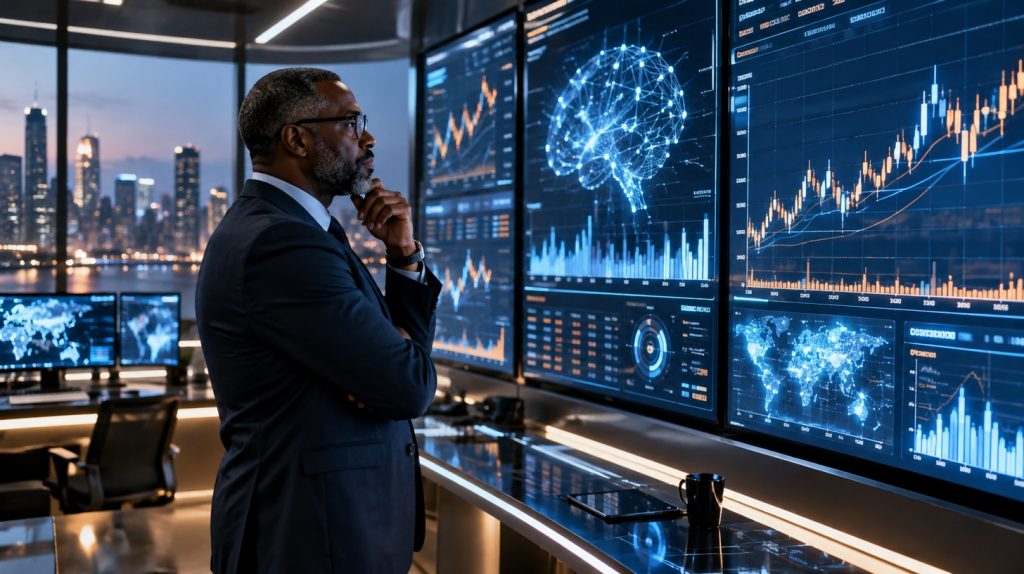
Chapter 2: how AI changes trading, risk, and client service
The biggest gains often come from work people never see.
On a trading desk, AI can spot unusual price moves, process breaking news, and help choose when to execute an order. GenAI can sift through earnings calls and regulatory filings in seconds. That gives analysts more time to check the story behind the numbers rather than search for them. In calmer markets, better order routing can also lower trading costs and help buyers find sellers.
In lending, AI helps assess credit risk and detect suspicious applications. Wealth managers can use it to explain portfolio changes and tailor client updates. Investment bankers can review long deal documents faster. Legal and tax teams use AI to check records and prepare drafts for expert review.
Agentic AI goes further. It can complete a series of steps, such as preparing a payment or a trade for approval. That makes strict access rules and a record of every action essential.
There is a downside. A language model can make up a fact and sound certain. Trading systems trained on similar data may react to the same signal at once, adding pressure to a falling market. A shared cloud provider or AI service can also become a weak point for many firms. The Financial Stability Board calls for testing, human oversight, and better checks on outside AI providers.
What the benefits look like in practice
- Faster operations: Teams spend less time sorting documents, answering routine questions, and checking data by hand. JPMorganChase says it has doubled the number of AI use cases running in production. It also identified about $600 million in efficiencies across projects, only some of them linked to AI.
- Stronger risk controls: AI can flag unusual trades, payment fraud, and shifts in borrower behavior sooner. These alerts still need people who understand the context and can act on them.
- Better client experience: Faster service and clearer portfolio explanations can help clients make sense of complex choices. The best tools give advisers more time to talk to people, not less.
AI won’t make markets predictable. It may make them faster, more connected, and more sensitive to shared mistakes. The firms that benefit most will be those that pair useful technology with good data, careful checks, and people willing to question the machine.